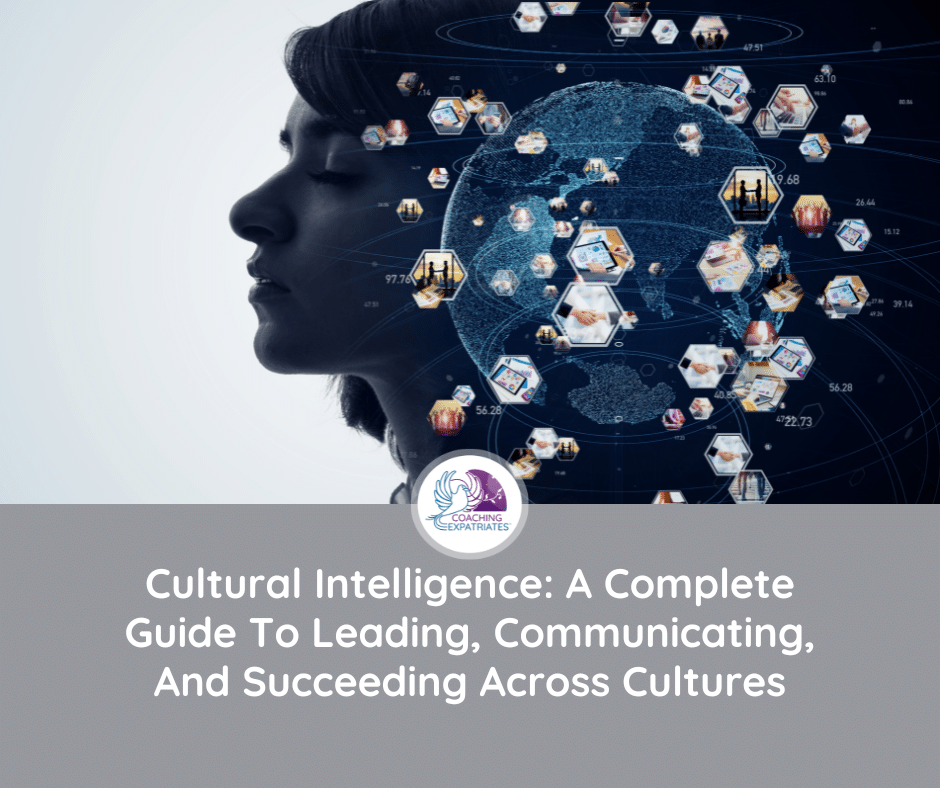
Learn the research, frameworks, assessments, and practical strategies that shape cultural intelligence, and how to apply CQ to leadership, communication, and global collaboration.
This is a comprehensive guide to cultural intelligence for leaders, professionals, and organizations who want to strengthen leadership presence and effectiveness, communication, and global collaboration across diverse cultural environments.
Cultural intelligence is the capability to understand, interpret, and adapt effectively across cultural contexts. It includes the motivation to engage, the knowledge of cultural differences, the ability to make sense of intercultural situations, and the capacity to adjust behavior in real time.
This guide explains the research behind cultural intelligence, introduces its core capabilities, compares it with related concepts such as emotional intelligence and cultural competence, and explores the most widely used cultural frameworks and dimensions. It also covers how cultural intelligence can be measured, developed, and applied in leadership, teamwork, and international business settings.
Estimated reading time: 65–75 minutes.
Table of Contents
Cultural intelligence is the ability to understand, adapt, and work effectively across cultures. It affects how people communicate, build trust, make decisions, handle conflict, and lead in diverse environments. In a world where teams, clients, suppliers, and stakeholders often span countries and cultures, that capability is no longer optional. It is part of doing business well.
Still, cultural intelligence is often misunderstood even in successful global leadership environments.
Some people reduce it to cultural awareness. Others treat it as etiquette, country knowledge, or a form of interpersonal sensitivity. Those things do matter, but they are only part of the picture.
Cultural intelligence goes further. It helps explain why some leaders create alignment across differences while others create confusion without realizing it. It helps explain why some global teams turn diversity into innovation, while others struggle with friction, misread intentions, and poor decisions. It explains how executive presence can be perceived across cultures.
That is what this guide is about.
In this article, you will learn what cultural intelligence is, where the research comes from, why it matters for leadership effectiveness, and what risks arise when CQ is low. We will look at the four capabilities of cultural intelligence, key cultural frameworks, major dimensions that shape behavior across societies, and ways cultural intelligence can be measured and developed. We will also cover practical strategies, recommended books, and common questions people ask about CQ.
The goal is not simply to help you understand the concept.
It is to help you think about how cultural intelligence can improve leadership, communication, global collaboration, and business outcomes.
Along the way, you may also start noticing something deeper. Many problems that look like communication issues, trust issues, or even performance issues may have a cultural intelligence component underneath them.
And once you see that, you start seeing opportunities differently.
But before we get into models and research, let’s start where many of the best lessons begin — with stories.
Some are funny. Some are painful. All of them reveal something important about how culture shapes meaning.
Ready for a few stories first?
What Is Cultural Intelligence? Examples That Show Why It Matters
Cultural intelligence is the ability to understand, interpret, and adapt effectively across cultures. It shapes how people navigate cultural differences in communication, relationships, decision-making, and problem-solving. More than cultural awareness, cultural intelligence involves making sound judgments in unfamiliar cultural contexts and adjusting behavior when cultural norms, expectations, or communication styles differ from one’s own.
That distinction matters because many problems in cross-cultural situations do not begin with poor intentions. They begin with misunderstanding. A gesture is interpreted differently than intended. A negotiation tactic sends the wrong signal. Body language creates discomfort. Language barriers hide what people mean rather than what they say. Small cultural cues are missed, and what appears to be a minor issue can grow into distrust, delay, or damaged working relationships.
This is where cultural intelligence matters. It helps people move beyond assumptions and respond more effectively to cultural complexity. It improves intercultural communication because it helps individuals recognize cultural nuances, adapt behavior, and reduce cultural misunderstandings before they affect outcomes. Often, the concept is easier to grasp through examples than through definitions alone.
Consider a BBC producer who frequently traveled across Europe to meet business agents. In countries such as Denmark and Germany, where time tends to be treated in a linear and structured way, meetings followed schedules closely and his usual approach worked well. But in Greece, he faced a recurring problem. A popular local agent constantly ran overtime with meetings, leaving the producer waiting for hours and increasingly frustrated.

At first, he treated the issue as a scheduling problem. Eventually, he realized it was a cultural one. Rather than insisting on his own expectations about time, he adapted his strategy. He began asking the agent’s secretary for his daily itinerary and would position himself where he could meet the agent between appointments. The approach worked. The agent was pleased to see him and often made time for long conversations. Nothing changed in the environment itself. The producer changed how he operated within it. That is cultural adaptation in practice.
A very different example shows how a lack of cultural intelligence can carry much higher stakes. During a lease negotiation in Japan, a western executive and his colleague met with the elderly president of a building company. After a formal discussion, the president stated the rental price. The colleague immediately responded by offering half the price, drawing from a bargaining style he had learned in a culture where aggressive negotiation was expected and even enjoyed.
But in that context, the move caused a “loss of face.” The Japanese president stood up, bowed politely, and left the room. The negotiation ended there. What appeared to one side as a normal negotiating tactic was interpreted by the other as an utter disrespect. This was not a pricing problem. It was a failure to read the cultural norms and behaviors governing status, harmony, and respect in that context. Cultural intelligence often matters precisely in moments where the wrong interpretation is invisible to the person making it.
Another example shows how even well-intended questions can create problems when cultural knowledge is limited. An American agricultural specialist working in Egypt asked a local farmer how much crop yield he expected that year. It seemed like a practical question. Yet the farmer reacted with offense. Only later did the specialist learn that, in that cultural context, speaking too confidently about the future could be seen as inappropriate, because ultimate knowledge of the future belongs to God. The issue was not the question itself, but the cultural meaning attached to it.
Examples like this reveal an important lesson. In intercultural interactions, words carry assumptions beneath them. Literal meaning and social meaning are not always the same. Cultural intelligence helps people notice that distinction.
The same is true for non-verbal communication. Researcher Harry Triandis once described speaking with a Mexican government official at a social event. The official preferred a much closer interpersonal distance than Triandis found comfortable. As the official moved closer, Triandis kept stepping back, and the two effectively “danced” around the room while each unconsciously tried to preserve a different sense of appropriate social space. The story is humorous, but the lesson is serious. Behavioral differences involving body language, spatial norms, and cultural cues often shape interactions long before anyone speaks about them.
Even simple travel mistakes can reveal the same point. A book author in England nearly stepped into buzy traffic because he looked the wrong direction before crossing the street. Then in Spain, he offended hosts by declining a musical performance arranged in his honor because he misunderstood the name of the student group performing, “Tuna“, for a fish dinner he thought they were offering him. Of course, neither mistake came from bad intentions. Both reflected limited familiarity with cultural variation, and both became learning experiences.
That is another important point about cultural intelligence. It does not mean avoiding all mistakes. It means learning faster from them. It means improving cultural judgment over time, becoming more aware of assumptions, and adapting more skillfully in unfamiliar cultural settings.
Seen this way, cultural intelligence is not a soft skill added on top of business performance. It is a practical capability that affects how people communicate across cultural barriers, navigate intercultural relationships, and function effectively in culturally diverse environments. It can shape negotiations, trust, teamwork, customer relationships, and leadership outcomes.
At its core, cultural intelligence helps people avoid imposing their own assumptions on someone else’s reality. In global work, that can change decisions, relationships, and results.
These examples show what cultural intelligence looks like in practice. Next, let’s look at where the concept came from and how CQ became a serious field of research and leadership study.
The Research Behind Cultural Intelligence And How CQ Became A Leadership Capability
Cultural intelligence may sound like a newer idea, but its roots go back much farther than many people realize. The concept did not emerge in isolation. It grew out of decades of work in cross-cultural research, organizational behavior, and the behavioral sciences, all trying to answer a practical question: Why do some people adapt and perform effectively across cultures while others struggle, even when they are technically capable and well-intentioned?
Some of the earliest groundwork came from researchers such as Edward T. Hall, whose work beginning in the 1930s and later writings on context, time, and communication helped establish many of the ideas still used in intercultural studies today. Hall showed that culture shapes far more than etiquette. It shapes meaning itself. How people interpret silence, use time, manage personal space, or communicate indirectly are not small social details. They influence how trust is built, how decisions unfold, and how collaboration works.
Over time, researchers began asking a larger question. If people can have general cognitive intelligence, often referred to as IQ, and emotional intelligence, often called EQ, could there also be a form of intelligence specifically related to functioning across cultural settings?
That question became the foundation for cultural intelligence.
Researchers P. Christopher Earley and Soon Ang helped formalize the answer. In their 2003 book, Cultural Intelligence: Individual Interactions Across Cultures, they introduced cultural intelligence as a distinct capability that helps individuals adapt effectively in unfamiliar cultural contexts. This was an important shift. It moved the conversation beyond cultural sensitivity or awareness and positioned CQ as a capability that could be studied, developed, and measured.
That last point mattered enormously. Because once a capability can be measured, it can be researched more rigorously. And once it can be researched rigorously, it can begin to influence leadership development.
Early CQ research drew in part from theories of multiple intelligences, but researchers also recognized something important. Emotional intelligence alone did not fully explain why a person who is highly effective in one cultural setting may perform poorly in another. Someone may be emotionally perceptive at home, for example, and still misread communication patterns, authority dynamics, or cultural cues abroad.
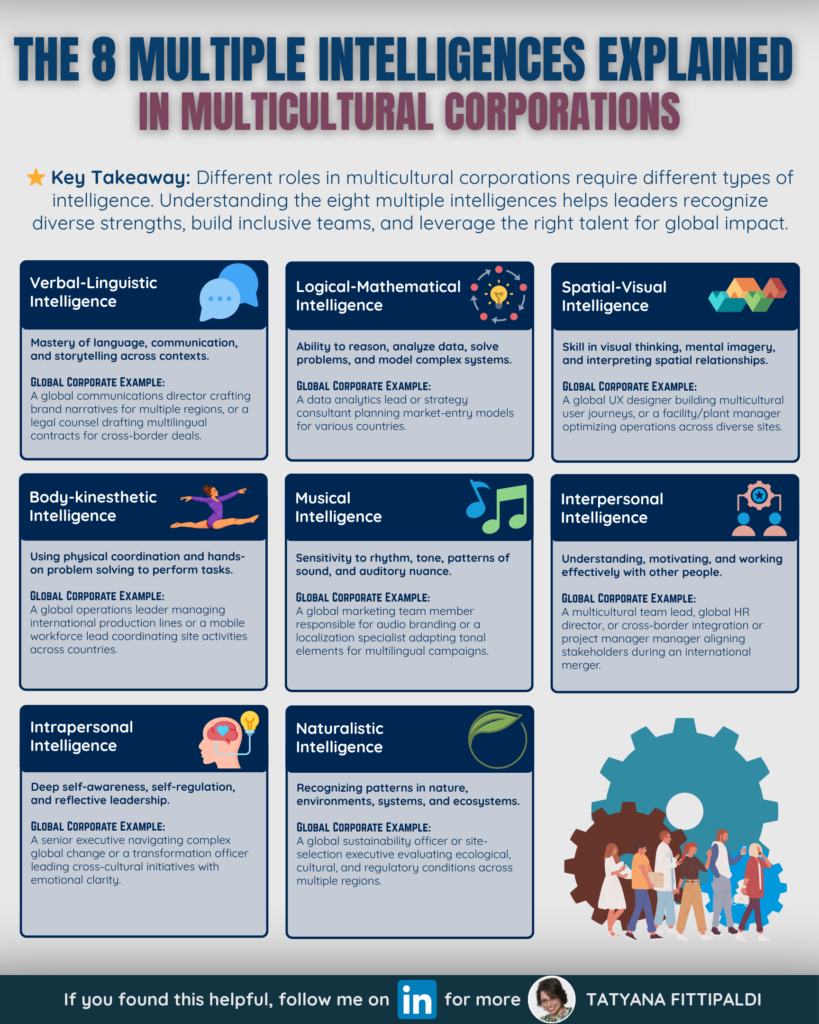
Something additional was happening. CQ was proposed as that additional capability.
Researchers eventually organized cultural intelligence into a four-factor model made up of motivational, cognitive, metacognitive, and behavioral dimensions, often referred to as CQ Motivation, CQ Knowledge, CQ Strategy, and CQ Behavior. This framework gave the field structure and helped move CQ from an appealing idea into a serious research domain.
A major milestone came with the development of the Cultural Intelligence Scale, often called the CQS. This 20-item instrument became the foundational tool for measuring CQ and remains one of the most widely used and scientifically validated assessments in the field. It also laid the groundwork for later tools used by organizations and institutions, including those associated with the Cultural Intelligence Center, sometimes also referred to as the Cultural Intelligence Centre.
This was a turning point because research could now move beyond theory and begin testing outcomes.
- Did higher CQ predict stronger leadership performance?
- Did it improve intercultural adjustment?
- Did it affect negotiation, decision-making, or multicultural teamwork?
Researchers began testing those questions. And the evidence grew.
Studies examined assessment scores, predictive validity, and what researchers call incremental validity, meaning whether cultural intelligence predicts outcomes above and beyond other established factors. In other words, does CQ explain something important that IQ, EQ, or personality traits do not explain on their own?
Research increasingly suggested yes. That is part of why cultural intelligence began to gain attention as a leadership capability rather than remaining a niche academic topic.
The quality of this research also mattered. Studies examined issues such as inter-rater reliability, statistical power analysis, and construct validation to ensure the findings were robust. These are technical ideas, but they point to something simple. Researchers were not treating CQ as a loose metaphor. They were treating it as a measurable capability subject to scientific scrutiny.
That helped the field mature.
By the mid-2000s, momentum accelerated. The first symposium on cultural intelligence was held in 2004. A major conference followed in 2006. Research expanded rapidly across management, psychology, international business, and leadership studies. Articles began appearing in influential outlets, including work discussed through venues such as Harvard Business Review, which helped bring the topic beyond academia and into management practice.
That movement mattered because leadership capabilities often gain traction in organizations only after they move from scholarly evidence into applied relevance.
CQ was making that move.
Another reason the field developed credibility is that researchers did not rely on a single way of measuring capability. While the Cultural Intelligence Scale became foundational, scholars also distinguished between typical-performance measures and maximum-performance measures.
That distinction is useful.
A typical-performance measure asks how people generally tend to think or behave. It captures usual patterns.
A maximum-performance test asks what people can do when responding to a challenging scenario at their best.
Both matter. One reflects everyday tendencies. The other reflects potential capability. This distinction later helped support additional approaches such as situational judgment tools and other forms of performance-oriented assessment, which we will cover later in this guide.
The larger point is this: Cultural intelligence did not become a leadership capability because it sounded appealing or aligned with trends around globalization. It became a leadership capability because a growing body of research showed it helped explain outcomes that matter in real organizations. Outcomes like adaptation, trust, leadership effectiveness, decision quality, and collaboration, even when differences emerge.
That is why CQ now sits at the intersection of research and practice. It has roots in the behavioral sciences. It has been shaped through organizational research. It has been measured, tested, challenged, and refined. And it has increasingly been recognized as relevant to how leaders operate in a culturally complex world.
In the next section, we will move from “where cultural intelligence came from” to a bigger question: “why research increasingly suggests it matters for leadership effectiveness” in the first place.
Why Cultural Intelligence Matters For Leadership Effectiveness
Cultural intelligence is increasingly recognized as a core capability for leadership effectiveness, especially in environments where teams, stakeholders, and markets span different cultural contexts. It influences how leaders communicate, make decisions, build trust, and align people who may interpret the same situation in very different ways.
That influence becomes more visible as organizations become more global. Business leaders are no longer operating within a single cultural frame. They are leading across cultural differences that affect leadership behavior, expectations of authority, communication styles, and even what “good performance” looks like. In that context, cultural intelligence becomes part of how leadership actually works.
Research has been consistent on this point. Cultural intelligence is not just helpful. It is predictive. Studies show that CQ predicts leadership performance and leadership emergence in cross-cultural leadership settings. In other words, leaders with higher cultural intelligence are more likely to be seen as effective and more likely to emerge as leaders in culturally diverse environments. This predictive validity is particularly strong in global business interactions, where cultural complexity is part of daily operations.
There is also an important distinction between cultural intelligence and emotional intelligence. Emotional intelligence is a strong predictor of leadership effectiveness in familiar, domestic contexts.
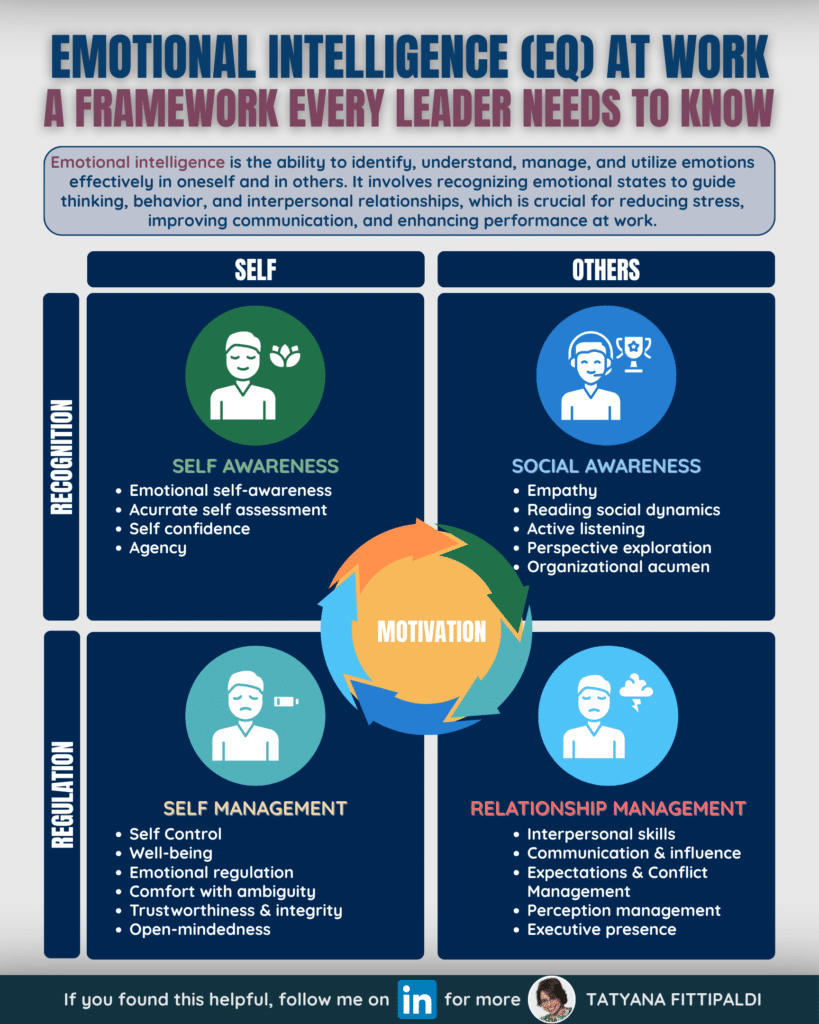
But when leaders operate across borders, that advantage does not always carry over. Cultural intelligence becomes more relevant because it helps leaders interpret unfamiliar cues, adjust leadership communication, and respond appropriately in cross-cultural situations.
This is where many experienced leaders face an unexpected challenge. A leadership approach that works well in one organizational culture or national context may not translate effectively in another. Cultural intelligence helps bridge that gap by allowing leaders to adjust without losing clarity or direction.
The impact of cultural intelligence is also visible in how leaders manage teams.
Multicultural teamwork can be a source of innovation, but it can also create friction. Differences in communication patterns, decision-making styles, and expectations around hierarchy can slow progress if they are not understood. Research by Watson, Kumar & Michaelsen (1993) shows that diverse teams can underperform at the beginning of team work compared to more homogeneous teams. But when leaders and diverse team members have higher CQ, later stages in team dynamics and interaction show higher performance in the more diverse teams. Diversity becomes an advantage, leading to stronger collaboration, better problem-solving, and improved outcomes.
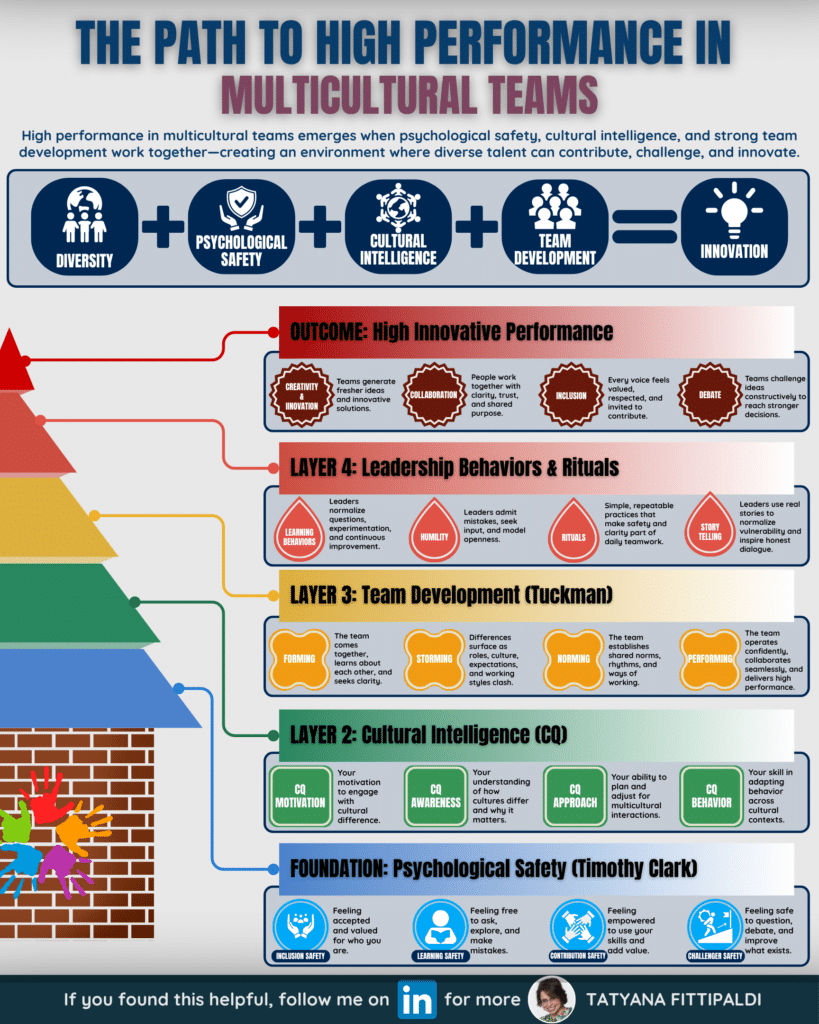
This is one of the reasons cultural intelligence is closely connected to inclusive leadership. Inclusion is not only about representation. It is about creating an environment where people feel understood, respected, and able to contribute. Cultural intelligence supports that by helping leaders recognize different perspectives, reduce misinterpretation, and build psychological safety within teams.
The connection extends to organizational culture as well. Leaders shape how culture is experienced day to day. Their decisions, communication, stories, and behavior influence how people interpret expectations and how teams function. Cultural intelligence helps leaders operate more effectively within and across different cultural environments, which in turn strengthens alignment and performance.
Another area where cultural intelligence matters is international business. Leaders working across markets must navigate differences in customer preferences, negotiation styles, and business norms. What builds trust in one market may not work in another. What signals commitment in one context may be interpreted as pressure in another. Cultural intelligence helps leaders adjust their approach without losing strategic focus.
There is also evidence linking CQ to career outcomes. Managers with higher cultural intelligence tend to receive stronger evaluations in terms of suitability for international roles and success in global assignments. They adapt more effectively, build relationships faster, and are better able to manage the demands of cross-cultural leadership.
Taken together, the research points to a consistent conclusion. Cultural intelligence helps leaders operate more effectively in environments where meaning is not shared by default. It supports better leadership communication, stronger relationships, and more effective execution in culturally diverse settings.
The Business Case: Why Cultural Intelligence Matters
While working at General Electric, I was selected to participate in an Advanced Leadership Strategy program at the Crotonville institute. It was one of those moments that feels like both recognition and responsibility.
What I didn’t know at the time was that part of the program was designed as an experiment.
Participants were grouped in ways that reflected different backgrounds and, in practice, different levels of cultural intelligence. It was not framed that way explicitly, but looking back, that is exactly what was being tested.
We were divided into teams to run a Business Strategy Game simulation. My group was highly diverse, with people from different cultural backgrounds, and we all self-reported relatively high levels of cultural intelligence. Other groups were more homogeneous, mostly American. There was also a diverse group with lower levels of cultural intelligence. I do not remember all the exact configurations, but I do remember how the experience unfolded.
In the early rounds, our team struggled. We were consistently near the bottom, ranking fourth or fifth. Alignment was not immediate. We had different perspectives, different ways of communicating, and different approaches to decision-making.
But something started to shift.
As we moved from storming to performing, the dynamic changed.
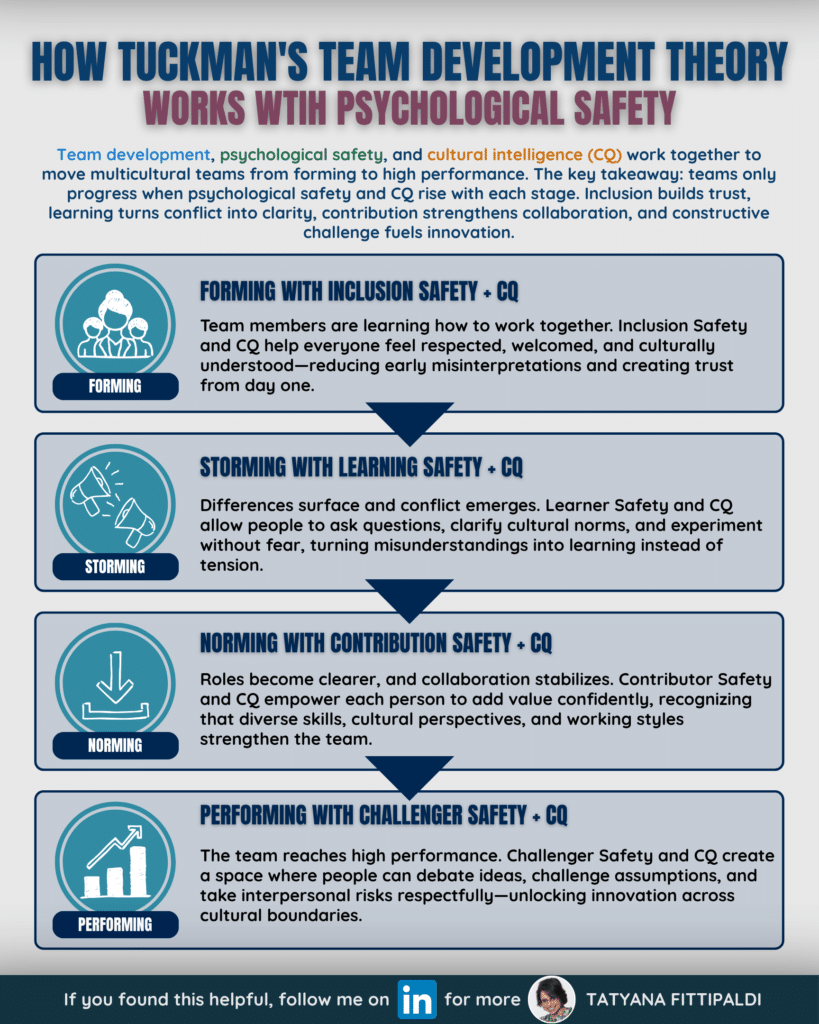
People began to find their roles. Communication became clearer. Trust built gradually. Instead of pulling in different directions, we started working as a coordinated unit.
By the end of the simulation, we had moved to the top.
I may not remember every detail of the final rankings, but I clearly remember the process. I remember how engaging it felt to work through the complexity. I remember how the collaboration evolved. And I remember the moment when performance became almost effortless, because the team was fully aligned.
Everyone was engaged. Everyone supported each other. Decisions moved faster. Execution became cleaner.
It felt like a single mind at work.
The simulation itself did not leave much room for innovation, at least at the time. But the way we worked together felt innovative. Not because of the tools or the strategy, but because of how we navigated our differences.
That experience stayed with me. Because it showed, in a very practical way, what happens when cultural intelligence is not just understood, but applied.
The research provides a strong foundation supporting positive outcomes associated with cultural intelligence. But for most organizations, the question is practical; it’s about application. How does cultural intelligence translate into business outcomes?
One area is performance and adjustment. Professionals with higher cultural intelligence tend to adapt more quickly when working in new cultural environments. This includes not only general adjustment, but also interactional adjustment, which affects how they relate to colleagues, clients, and partners. Faster adjustment reduces friction and allows people to become productive sooner, which is especially important in international assignments and global projects.
Another area is teamwork and leadership effectiveness. As mentioned earlier, diverse teams do not automatically perform better. Without the ability to navigate cultural differences, teams can experience misalignment and slow decision-making. Cultural intelligence helps leaders guide multicultural teamwork more effectively, turning diversity into a source of innovation and productivity rather than conflict.
Cultural intelligence also plays a role in conflict resolution and negotiation. Professionals with higher CQ tend to demonstrate more cooperative and integrative behaviors. They are better at reading context, managing relationships, and finding solutions that work across cultural boundaries. This often leads to higher success rates in negotiations and stronger long-term partnerships.
The connection to diversity, equity, and inclusion initiatives is also clear. Cultural intelligence helps create a sense of belonging by reducing misunderstanding and increasing mutual respect. When people feel understood, they are more likely to contribute, engage, and stay. This has direct implications for retention, morale, and overall organizational health.
Finally, cultural intelligence supports business strategy. Leaders who understand cultural dynamics are better equipped to adapt strategies to different markets, align global teams, and respond to complexity without oversimplifying it. They can translate strategic intent in ways that resonate across cultures, which is critical for execution.
This is why cultural intelligence has moved from a niche topic into a leadership capability. It connects directly to outcomes that matter: performance, collaboration, trust, and business success.
In the next section, we will look at what happens when cultural intelligence is missing, and why low CQ can create risks that are not always immediately visible.
When Low Cultural Intelligence Creates Business Risk (Examples And Impact)
When cultural intelligence is low, the risks are not always obvious at first. They often show up as small missteps in communication patterns, misread cultural cues, or assumptions that seem reasonable within one cultural context but carry a very different meaning in another.
Over time, those small gaps can accumulate.
They affect how people interpret intent, how trust is built, how decisions are made, and how organizations are perceived. In global business interactions, where cultural complexity is already high, these gaps can translate into real business risk.
At a practical level, low cultural intelligence increases the likelihood of cultural misunderstandings, weak cultural judgment, and reliance on cultural stereotypes or unconscious cultural biases. It also makes it harder to navigate language barriers, adapt to different behavioral preferences, and recognize how customer preferences are shaped by local norms.
The result is not just friction. It is exposure.
Below are some of the most common types of risk that emerge when cultural intelligence is not sufficiently developed.
Key Business Risks Of Low Cultural Intelligence
- Reputational Risk
Organizations (and people) can damage their reputation when cultural nuances are missed and actions are perceived as tone-deaf or disrespectful.
Example: In 2015, a Tesco store in London placed Smokey Bacon Pringles in a Ramadan promotional display under a “Ramadan Mubarak” banner. Although the product’s flavoring did not contain actual pork, the association created a strong negative reaction. The issue was not product composition. It was cultural meaning. The company later acknowledged the mistake and adjusted the display, but the incident highlighted how easily brand perception can be affected when cultural context is not fully considered.

- Financial And Commercial Risk
Cultural misunderstandings can lead to lost revenue, failed campaigns, or ineffective market entry strategies.
Example: Early translations of Coca-Cola in China unintentionally rendered the name as “bite the wax tadpole.” While the issue was later corrected with the name Kekoukele, meaning “tasty fun,” the initial misstep showed how language barriers and insufficient cultural adaptation can undermine even the strongest brands. Similarly, Pepsi faced confusion when a slogan was interpreted as “bringing ancestors back from the grave,” demonstrating how communication patterns can shift meaning across cultures. - Partnership And Opportunity Risk
Business opportunities can be lost when cultural judgment is misaligned, especially in negotiations or partnerships where trust and respect are essential.
Example: In many cross-cultural negotiations, an approach that signals confidence in one context can signal disrespect in another. A failure to adapt communication style or pacing to local expectations can lead partners to disengage, even when the underlying business case is strong. - Interpersonal And Alliance Risk
Relationships between leaders, teams, or partners can weaken when cultural differences are misinterpreted, affecting collaboration and long-term alliances.
Example: In 2009, Michelle Obama placed her arm around Queen Elizabeth II during a visit to Buckingham Palace. The gesture was warm and human, but it broke established royal protocol. While the Queen responded positively, the moment created debate in the media. In a business context, similar moments can create confusion about respect, hierarchy, or professionalism if cultural expectations are not understood. - Misinterpretation And Communication Risk
Messages can be misunderstood when communication styles, language proficiency, or cultural cues are not aligned, leading to poor decisions or misaligned execution.
Example: Differences in direct versus indirect communication can cause teams to misread agreement, urgency, or disagreement. What sounds clear in one cultural setting may feel abrupt or incomplete in another. Over time, these gaps can affect coordination, timelines, and results.
These risks share a common pattern. They rarely come from intentional mistakes. They come from gaps in how meaning is interpreted across cultural settings.
This is why cultural intelligence is closely tied to business strategy and organizational culture. Leaders who understand cultural dynamics are better able to anticipate how actions will be perceived, adapt communication patterns, and reduce unnecessary friction in global environments.
Another way to think about it is this. Low cultural intelligence increases the probability of misalignment. Misalignment in interpretation leads to misalignment in action. And misalignment in action leads to risk.
The examples above may seem unrelated at first. A retail display, a brand translation, a diplomatic gesture. But they are connected by the same underlying issue. The meaning created by an action was different from the meaning intended.
Cultural intelligence helps close that gap.
In the next section, we will look more closely at how cultural intelligence differs from cultural awareness and cultural competence, and why that distinction matters for developing this capability in practice.
Cultural Intelligence vs Cultural Awareness vs Cultural Competence
When people talk about working across cultures, three terms often come up: Cultural Intelligence, Cultural Awareness, and Cultural Competence. They are related, and sometimes used interchangeably, but they do not mean the same thing. Understanding the difference matters, because each one points to a different level of capability.
Let’s start with Cultural Awareness.
Cultural Awareness refers to recognizing that cultural differences exist. It includes understanding that people from different cultural backgrounds may have different values, norms, communication styles, and expectations. This is often where cultural learning begins. It builds basic cultural knowledge and helps people become more sensitive to cultural dynamics in a given environment.
But awareness alone is limited.
Knowing that differences exist does not automatically translate into effective action. Someone can understand cultural norms in theory and still struggle to communicate, adapt behavior, or navigate real intercultural situations. Awareness is necessary, but it is not sufficient.
This is where Cultural Intelligence becomes distinct.
Cultural Intelligence is the capability to adapt, function, and perform effectively in culturally diverse settings. It goes beyond awareness by integrating multiple capabilities that work together. It includes not only cultural knowledge, but also the ability to plan interactions, stay aware in the moment, adjust behavior, and maintain the motivation to engage across cultural barriers.
One way to understand this difference is to think in terms of knowing versus doing.
Cultural awareness builds knowledge about cultural patterns, norms, and variation. Cultural intelligence uses that knowledge to guide behavior in real situations. It helps individuals move from understanding differences to acting effectively within them.

There are a few critical gaps that appear when awareness is not supported by broader capability.
First, knowledge alone does not guarantee flexibility. A person may understand communication patterns or social expectations in a different culture but still fail to adjust their own behavior. This often leads to cultural misunderstandings, even when the person believes they are well-informed.
Second, awareness does not address motivation. People may understand cultural differences and still choose not to adapt. Cultural intelligence includes the drive to engage, which is essential for effective intercultural communication and professional relationship building.
Third, isolated knowledge can create overconfidence. When individuals rely only on cultural information, they may fall back on simplified interpretations or cultural stereotypes. Without the ability to question assumptions and adjust in context, this can lead to poor cultural judgment rather than better outcomes.
This brings us to Cultural Competence.
Cultural Competence is often defined as the ability to work effectively across cultures through a combination of behaviors, attitudes, and policies. In many fields, especially healthcare and education, it is described as a developmental journey. Individuals and organizations move from a limited perspective toward a more inclusive and informed way of operating across cultural environments.
In that sense, cultural competence represents a broader goal. It reflects a state where individuals are able to navigate cultural differences with understanding and respect.
However, the concept itself can be broad and sometimes inconsistent. Across different disciplines, there are many definitions of cultural competency, and not all of them are grounded in a single theoretical model. Some focus heavily on cultural sensitivity. Others emphasize policy, awareness, or behavior. This can make the concept harder to measure and apply consistently.
Cultural intelligence offers a more structured approach.
While cultural competence describes the desired outcome, cultural intelligence provides a framework for how to get there. It organizes intercultural capability into four interconnected dimensions: motivation, knowledge, strategy, and action. These dimensions work together to support effective behavior in real cultural situations.
Another way to see the difference is through a focus management lens.
Cultural competence tends to emphasize mindset, awareness, and sensitivity. Cultural intelligence focuses on action-oriented capability. It asks a practical question: Can this person operate effectively in a culturally complex environment?
A person may be culturally sensitive and still struggle to lead a multicultural team, align different communication styles, or adapt to changing cultural expectations. Cultural intelligence addresses that gap by connecting awareness with execution.
It also integrates the full range of capabilities required. Rather than isolating cultural knowledge or behavior, it brings together the “head, heart, and body” of intercultural effectiveness. This includes understanding cultural dynamics, staying aware of one’s own assumptions, maintaining the motivation to engage, and adjusting behavior in context.
The distinction becomes clearer when you look at application.
- Cultural awareness helps you recognize differences.
- Cultural competence describes the goal of working effectively across those differences.
- Cultural intelligence provides the tools to actually do it.
In practice, all three matter. Cultural awareness is the starting point. Cultural competence is the broader objective. Cultural intelligence is the capability that connects the two and makes effective adaptation possible.
This is why CQ is often treated as a leadership capability rather than just a learning outcome. It moves beyond understanding cultural environments and focuses on how individuals act within them.
In the next section, we will look more closely at how cultural intelligence works by breaking down its four core capabilities.
The 4 Cultural Intelligence Capabilities Explained: Motivation, Knowledge, Strategy, And Behavior
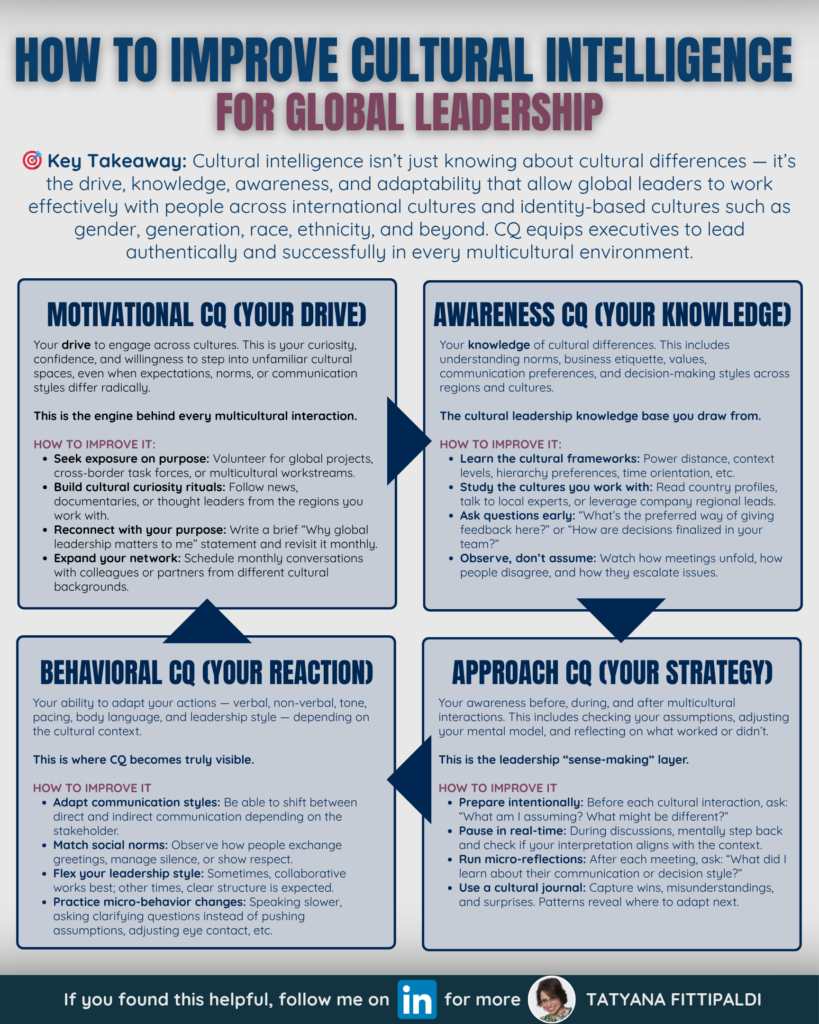
Cultural intelligence is not a single skill. It is a system of capabilities that work together. Research organizes this system into four core components: CQ Motivation, CQ Awareness, CQ Approach, and CQ Behavior. Each one plays a different role, and all four are needed to function effectively in culturally diverse settings.
A useful way to think about it is this. Cultural intelligence is not just about what you know. It is about whether you are willing to engage, how you make sense of what is happening, and whether you can adjust your behavior in the moment. These four capabilities bring those elements together.
Before we go into the four capabilities, a quick note on terminology.
You may see different names used to describe these capabilities depending on the source. In this guide, I will occasionally reference the terminology used by the Cultural Intelligence Center alongside broader, research-based language.
The intention is not to adopt or redefine any proprietary framework. It is to help you recognize how different terms map to the same underlying capabilities, so you can navigate the literature, assessments, and practical applications more easily.
Across research and practice, the structure is consistent. What varies is how those capabilities are labeled.
For simplicity, I will pair both versions where relevant and focus on the meaning behind them.
CQ Drive (Motivational CQ)
CQ Drive refers to your interest, motivation, and confidence to engage in cross-cultural situations. It answers a simple question: Do you want to do this, and do you believe you can?
This matters more than it may seem at first. Many people have exposure to different cultures, but not everyone is motivated to adapt. CQ Drive reflects your willingness to invest effort, stay engaged, and learn from unfamiliar cultural environments.
It is supported by three elements.
Intrinsic interest is the natural curiosity and satisfaction you get from interacting with different cultures. People with strong intrinsic motivation tend to explore cultural differences with genuine interest rather than hesitation.
Extrinsic interest reflects external rewards, such as career opportunities, international assignments, or business outcomes. In many global roles, this becomes a practical driver.
Self-efficacy to adjust is the belief that you can succeed in unfamiliar cultural situations. This confidence plays a key role. Without it, even individuals with strong cultural knowledge may avoid engagement or withdraw when situations become complex.
Together, these elements shape what we can think of as cultural drive. They determine whether a person leans into cultural complexity or pulls away from it.
CQ Knowledge (Awareness CQ or CQ Cognition)
CQ Knowledge refers to your understanding of how cultures are similar and how they differ. It includes the cultural knowledge you build through education, experience, and exposure.
This goes beyond surface-level facts. It includes understanding cultural norms, values, and behavioral preferences that shape how people communicate and interact. It also involves recognizing how systems such as legal frameworks, economic structures, and social expectations influence behavior.
There are two layers to this capability.
The first is general cultural knowledge. This includes broad patterns, such as how different cultures approach hierarchy, time, communication, or relationships.
The second is context-specific knowledge. This includes more detailed understanding of a particular cultural environment, such as local practices, industry norms, or organizational culture.
High CQ Knowledge allows people to recognize cultural variation and avoid simplistic interpretations. It also helps reduce reliance on assumptions, which is essential for sound cultural judgment.
However, knowledge alone is not enough. Many cultural misunderstandings occur even when people are well-informed. That is where the next capability comes in.
CQ Strategy (Approach CQ or CQ Meta-cognition)
CQ Strategy refers to how you think about cultural situations before, during, and after they happen. It is your ability to make sense of cultural complexity and adjust your approach accordingly.
This capability operates at a higher level. It is not just about what you know, but how you use that knowledge.
Before an interaction, CQ Strategy helps you plan. You consider the cultural context, anticipate possible differences, and decide how to approach the situation.
During the interaction, it helps you stay aware. You pay attention to cultural cues, monitor how your communication is being received, and adjust in real time if something feels off.
After the interaction, it helps you reflect. You evaluate what worked, what did not, and how your assumptions may need to change.
This process reduces the risk of relying on rigid mental models. Instead of applying the same approach across all cultural settings, individuals with strong CQ Strategy remain flexible and responsive.
It also supports the development of tacit knowledge over time. Through repeated experience and reflection, people build a more intuitive sense of how to navigate different cultural environments.
CQ Action (Behavioral CQ)
CQ Action refers to your ability to adapt your behavior in culturally appropriate ways. It is where cultural intelligence becomes visible.
Even with strong motivation, knowledge, and strategy, effectiveness depends on whether a person can translate those into action. This includes both verbal and non-verbal communication and behavior.
On the verbal side, it may involve adjusting tone, pacing, or level of directness depending on the cultural context. It can also involve choosing different ways to structure a message so that it aligns with local communication patterns.
On the non-verbal side, it includes adapting body language, gestures, facial expressions, and physical distance. These signals often carry meaning that varies across cultures and can influence how messages are received.
Behavioral CQ also involves adjusting interaction style. This may include shifting between more formal and informal approaches, adapting to different expectations around hierarchy, or aligning with local norms for decision-making and collaboration.
Importantly, effective behavior adjustments do not mean abandoning one’s values. They mean expressing those values in a way that can be understood and respected within a given cultural context.
Bringing The Four Capabilities Together
Each of these capabilities plays a distinct role, but they are interdependent.
- CQ Drive determines whether you engage.
- CQ Knowledge informs what you understand.
- CQ Strategy guides how you think.
- CQ Action determines how you behave.
If one is missing, effectiveness is limited. For example, strong knowledge without motivation may lead to disengagement. Strong motivation without strategy may lead to missteps. Strong strategy without action may never translate into results.
When all four are developed together, cultural intelligence becomes a practical capability. It supports better cultural judgment, more effective communication, and stronger performance across cultural settings.
In the next section, we will look at how these capabilities relate to other forms of intelligence and why cultural intelligence represents a distinct dimension of effectiveness.
How Cultural Intelligence Differs From IQ, EQ, SQ, And A Global Mindset
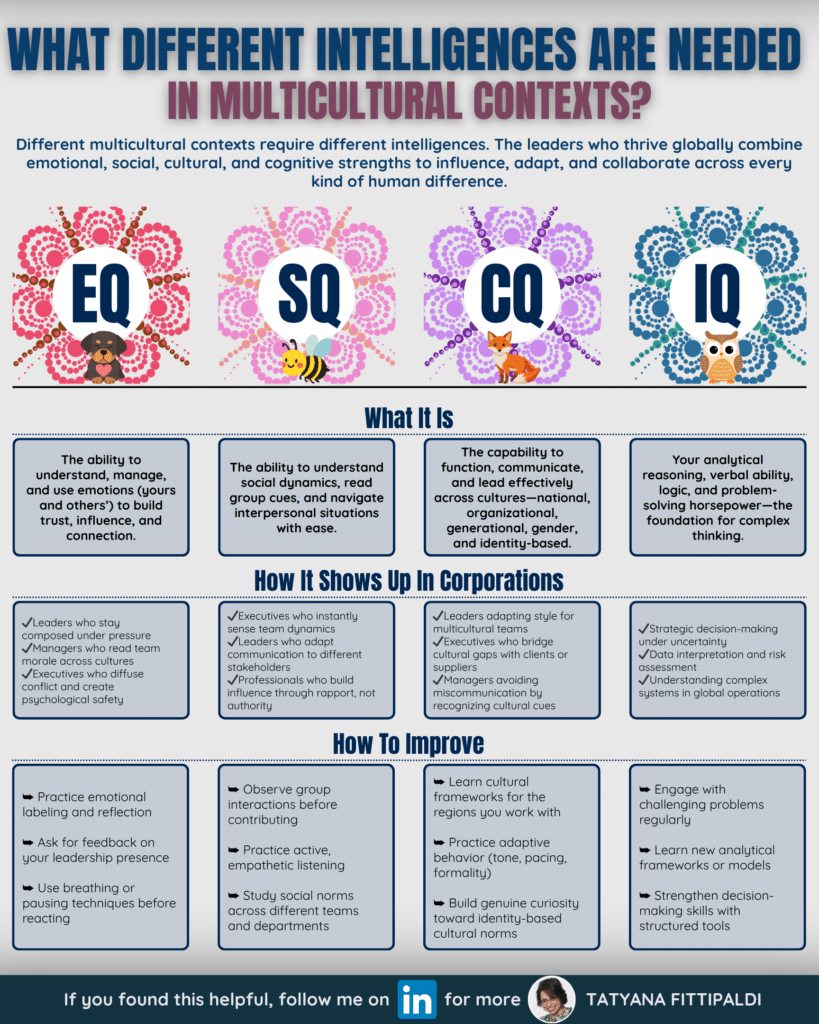
Cultural intelligence is often discussed alongside other well-known forms of intelligence and leadership capabilities. That comparison is useful, but it can also create confusion if the distinctions are not clear. Cultural intelligence overlaps with concepts such as Intelligence Quotient, emotional intelligence, social intelligence, and a global mindset, yet it addresses a different problem.
At a simple level, cultural intelligence focuses on effectiveness across cultures. The others focus on effectiveness more broadly, often within familiar environments. That difference becomes important in cross-cultural leadership, where the rules of interaction are not shared by default.
Intelligence Quotient (IQ)
Intelligence Quotient, often referred to as IQ, reflects a person’s ability to reason, solve problems, and learn across a wide range of situations. It is closely related to what is sometimes called fluid intelligence, which supports abstract thinking and problem-solving.
IQ matters in leadership. It helps individuals analyze complex problems, process information, and make decisions. It is also linked to performance across many roles.
However, IQ does not account for how those decisions are interpreted across cultural contexts. A solution that is logically sound may still fail if it does not align with local expectations, communication patterns, or organizational behavior shaped by culture.
Cultural intelligence extends beyond cognitive ability. It adds the capacity to interpret cultural signals, adjust behavior, and operate effectively when the meaning of actions varies across cultural environments.
Emotional Intelligence (EQ)
Emotional intelligence refers to the ability to recognize, understand, and manage one’s own emotions, as well as the emotions of others. It supports empathy, relationship building, stakeholder management, and effective leadership communication.
In many leadership settings, emotional regulation is a strong predictor of success. It helps leaders navigate interpersonal dynamics and build trust within teams.
But emotional intelligence is often shaped by the cultural environment in which it develops. Emotional expressions, social norms, and acceptable behaviors differ across cultures. A signal that indicates respect or engagement in one context may carry a different meaning in another.
This is where cultural intelligence becomes critical. It helps leaders interpret emotional cues within the appropriate cultural frame. It also helps them adapt their own communication so that their intent is understood as intended.
Without that adjustment, even strong interpersonal skills can lead to misinterpretation in cross-cultural situations.
Social Intelligence (SQ)
Social intelligence focuses on the ability to navigate relationships and understand social situations. It supports awareness of group dynamics, influence, and interaction patterns.
Like emotional intelligence, it plays an important role in leadership. It helps individuals read situations and respond in ways that maintain relationships and support collaboration.
However, social intelligence does not specifically address the challenge of cultural variation. It assumes, to some extent, a shared understanding of social norms.
In cross-cultural environments, that assumption does not always hold. Cultural intelligence fills that gap by focusing specifically on how social and interpersonal dynamics change across cultural boundaries. It helps individuals adjust their approach when familiar patterns no longer apply.
Global Mindset
A global mindset refers to a person’s ability to understand and operate across different markets, cultures, and systems. It includes openness to diversity, cognitive complexity, and the ability to integrate multiple perspectives.
This capability is often associated with business strategy and leadership at a global level. It helps leaders think beyond local contexts and consider broader organizational and market dynamics.
Cultural intelligence and a global mindset are closely related, but they operate at different levels.
A global mindset is more outward-facing. It focuses on how leaders understand and influence complex global environments, including markets, stakeholders, and organizational systems.
Cultural intelligence is more inward-facing. It focuses on the individual’s ability to adapt behavior, interpret cultural cues, and function effectively in intercultural interactions.
Another distinction is that a global mindset tends to emphasize knowledge and perspective, while cultural intelligence integrates motivation, cognition, and behavior. It connects what leaders understand with how they act in real situations.
A Practical Way To See The Difference
One way to bring these ideas together is to consider how each capability contributes to effectiveness.
- IQ helps you solve the problem.
- Emotional intelligence helps you manage the people involved.
- Social intelligence helps you navigate the situation.
- A global mindset helps you understand the broader context.
Cultural intelligence helps you ensure that everything above works across cultural boundaries.
It is the layer that connects these capabilities to intercultural competence. Without it, leaders may still perform well in familiar environments, but struggle when cultural complexity increases. With it, they are better equipped to adapt, communicate clearly, and lead effectively across different cultural settings.
In the next section, we will look at a simpler way to understand cultural intelligence through the lens of the head, the heart, and the body.
The Head, The Heart, And The Body Of Cultural Intelligence
Cultural intelligence can be explained through models and frameworks, but there is also a simpler way to understand how it works in practice. Researchers P. Christopher Earley and Elaine Mosakowski described cultural intelligence through three interconnected areas: the head, the heart, and the body.
This model captures something important. Cultural intelligence is not just about what you know. It is about how you think, how you feel, and how you act in culturally diverse situations. All three need to work together.
The Head: Understanding Cultural Differences
The head represents the cognitive side of cultural intelligence. It includes how you perceive, interpret, and make sense of cultural differences.
This is where CQ Knowledge and CQ Strategy come into play. CQ Knowledge reflects what you understand about cultural norms, values, and patterns across different environments. CQ Strategy reflects how you use that knowledge. It involves planning for intercultural interactions, staying aware of cultural cues during those interactions, and adjusting your thinking when your assumptions do not match reality.
Together, these capabilities help you build a more accurate picture of what is happening around you. They reduce the risk of misinterpretation and support better cultural judgment.
Over time, repeated exposure and reflection also build what is often called tacit knowledge. This is the kind of understanding that is difficult to explain but becomes intuitive through experience. It allows individuals to recognize patterns more quickly and respond with greater confidence in complex cultural settings.
The Heart: Motivation And Willingness To Engage
The heart represents the motivational and emotional side of cultural intelligence. It reflects your openness, your willingness to engage, and your confidence in navigating unfamiliar cultural environments.
This aligns directly with CQ Drive.
Without this component, knowledge and strategy are rarely applied. People may understand cultural differences but still hesitate to engage or adapt. The heart determines whether you lean into cultural complexity or avoid it.
A key element here is openness to experience. Individuals who are more open tend to approach cultural differences with curiosity rather than resistance. They are more willing to learn, experiment, and adjust their approach over time.
The heart also includes confidence. Cross-cultural situations can be uncertain. When individuals believe they can adapt and learn, they are more likely to persist through initial discomfort and build stronger capability over time.
The heart represents the motivational and emotional side of cultural intelligence. It reflects your openness, your willingness to engage, and your confidence in navigating unfamiliar cultural environments.
This aligns directly with CQ Drive.
Without this component, knowledge and strategy are rarely applied. People may understand cultural differences but still hesitate to engage or adapt. The heart determines whether you lean into cultural complexity or avoid it.
A key element here is openness to experience. Individuals who are more open tend to approach cultural differences with curiosity rather than resistance. They are more willing to learn, experiment, and adjust their approach over time.
The heart also includes confidence. Cross-cultural situations can be uncertain. When individuals believe they can adapt and learn, they are more likely to persist through initial discomfort and build stronger capability over time.
The Body: Behavior In Action
The body represents the behavioral side of cultural intelligence. It is where everything becomes visible.
This aligns with CQ Action, sometimes referred to as behavioral CQ.
It involves making behavior adjustments that fit the cultural context. This includes both verbal and non-verbal communication. Tone, pacing, and directness may need to change depending on the situation. Body language, gestures, facial expressions, and physical distance may also need to be adjusted to align with local expectations.
These signals often carry meaning that is not explicitly stated. Non-verbal communication can reinforce or undermine a message depending on how it is interpreted. Being able to read and adapt to these cultural cues is a critical part of effective interaction.
Importantly, adapting behavior does not mean losing authenticity. It means expressing your intent in a way that can be understood and respected within a given cultural environment. In the same way that speaking a different language to communicate more effectively does not make you inauthentic, adapting your behavior is simply the use of a skill. You are not changing who you are. You are choosing how to express it.
Seen this way, behavioral adaptation is less about compromise and more about range. It is the ability to adjust how you show up by activating different skills, traits, and preferences depending on where you are, who you are interacting with, and what the situation requires.

How The Three Work Together
The head, the heart, and the body are not separate capabilities. They operate as a system according to research from Geneva Day, University of Maryland publication.
- The head helps you understand what is happening.
- The heart determines whether you are willing to engage.
- The body determines how you respond in action.
If one is missing, effectiveness is limited. Strong knowledge without motivation leads to inaction. Strong motivation without understanding can lead to missteps. Strong understanding and motivation without behavioral flexibility may never translate into effective interaction.
When all three are aligned, cultural intelligence becomes practical. It supports better decision-making, clearer communication, and more effective behavior across cultural settings.
This model also connects directly to the four-factor framework introduced earlier. The head maps to CQ Knowledge and CQ Strategy. The heart maps to CQ Drive. The body maps to CQ Action.
Seen this way, the head, heart, and body model offers a more intuitive, visual way to understand how cultural intelligence operates in real situations.
In the next section, we will expand the lens and look at cultural frameworks that help explain how and why cultural differences take shape in the first place.
Cultural Frameworks That Help Explain Differences Across Cultures
Cultural intelligence becomes easier to apply when you have a way to interpret what you are observing. This is where cultural frameworks come in. They provide structure to what might otherwise feel like random differences. Instead of reacting to isolated behaviors, they help you recognize cultural patterns, understand underlying cultural dynamics, and make better decisions in complex cultural environments.
These frameworks do not explain everything, and they are not meant to stereotype individuals. But they do offer useful lenses for understanding how cultural norms, communication styles, and behavioral expectations vary across societies. When used carefully, they reduce guesswork and improve cultural judgment.
One recurring theme across many frameworks is the balance between competitiveness and collaboration. Different cultures resolve this tension in different ways, and that affects how people communicate, negotiate, and work together.
High-Context And Low-Context Cultures
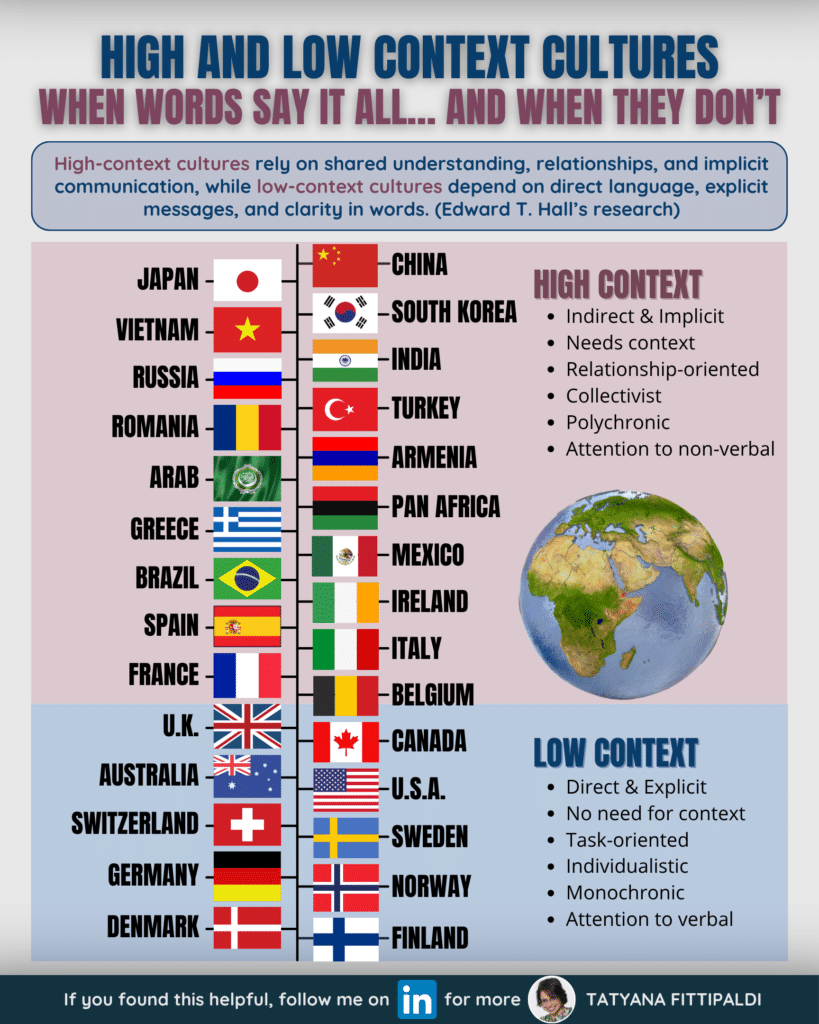
One of the most influential frameworks comes from Edward T. Hall, who introduced the idea of High-context and Low-context Cultures.
In high-context cultures, communication relies heavily on context, relationships, and shared understanding. Meaning is often implied rather than stated directly. These environments tend to prioritize harmony, group cohesion, and long-term relationships. As a result, collaboration is often emphasized, and open competition may be avoided if it risks disrupting social balance.
In low-context cultures, communication is more explicit and direct. Meaning is conveyed through words rather than context. These cultures tend to be more task-focused, and competition is often seen as a normal and even healthy part of achieving results. In business settings, this can translate into more direct feedback, faster decision-making, and a greater comfort with open disagreement.
Understanding this distinction helps explain differences in communication styles, negotiation approaches, and even scheduling considerations. For example, in some high-context environments, maintaining relationships may take precedence over strict adherence to time, while in low-context cultures, punctuality may signal professionalism and respect. The study of this dynamic is called chronemics.
Hofstede’s Masculinity And Femininity Dimension
Geert Hofstede introduced a set of cultural dimensions that remain widely used in organizational behavior and international business. One of these dimensions, often referred to as masculinity versus femininity, reflects how cultures balance competitiveness and collaboration.
Cultures on the more “masculine” side tend to value achievement, assertiveness, and success. Performance and results are emphasized, and competition is often encouraged.
Cultures on the more “feminine” side tend to value cooperation, modesty, and quality of life. Relationships and well-being are prioritized, and collaboration is often seen as more important than individual achievement.
This dimension does not describe individuals. It reflects broader cultural tendencies that influence how organizations operate and how people interpret success and behavior.
The GLOBE Model And Assertiveness
The GLOBE project expanded on earlier work by introducing additional cultural dimensions, including assertiveness. The project is absolutely incredible and you’ll definitely want to check it out if you have high CQ Notivation scores. Careful not the get lost in time with it. (wink)
Assertiveness measures how strongly a culture encourages individuals to be direct, confrontational, or competitive in their interactions. In highly assertive cultures, people are more comfortable expressing opinions openly and challenging others. In less assertive cultures, communication tends to be more indirect, and maintaining harmony may take priority over expressing disagreement.
This dimension has clear implications for leadership communication and teamwork. What is perceived as confidence in one cultural setting may be seen as aggressive in another. Cultural intelligence helps leaders recognize these differences and adjust their approach accordingly.
Trompenaars And The Balance Between Individual And Group
Fons Trompenaars offers another perspective through his model of cultural dimensions. One of his key distinctions is between individualism and communitarianism.
Individualistic cultures emphasize personal achievement and autonomy. Communitarian cultures emphasize group loyalty and collective outcomes.
Trompenaars also introduces the idea of reconciling these differences rather than choosing one over the other. In business, this can be seen in the concept of “co-opetition,” where individual creativity and competition are balanced with collaboration and shared goals. Teams may encourage strong individual contributions while aligning those contributions toward a collective outcome.
This perspective is particularly useful in multicultural teamwork, where both individual initiative and group cohesion are needed.
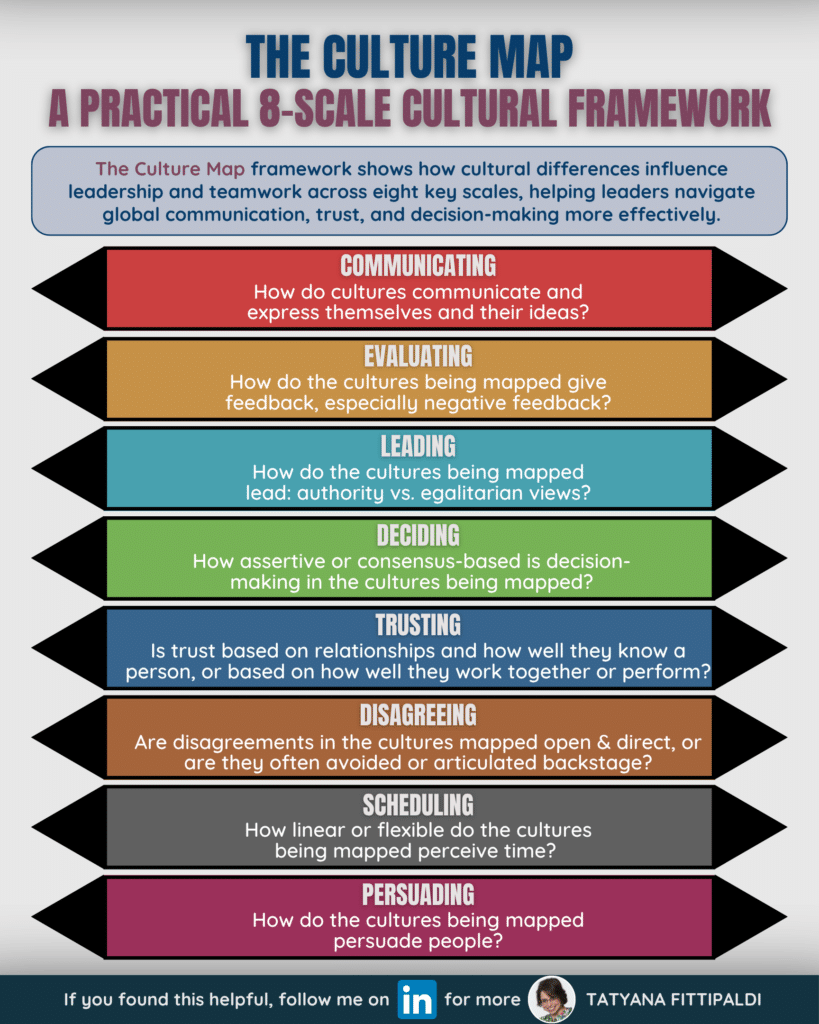
The Culture Map
Erin Meyer developed The Culture Map as a practical tool for navigating multicultural contexts. Her framework focuses on several key cultural dimensions that affect day-to-day business interactions, including how people communicate, give feedback, build trust, make decisions, and perceive time.
For example, cultures vary in how directly they communicate, how openly they provide feedback, and whether trust is built through task performance or personal relationships. They also differ in how decisions are made, whether through consensus or top-down authority, and how strictly time is managed.
The strength of this framework lies in its practical application. It connects cultural dimensions directly to business situations, making it easier for leaders to adjust their approach in global business interactions.
The Lewis Model
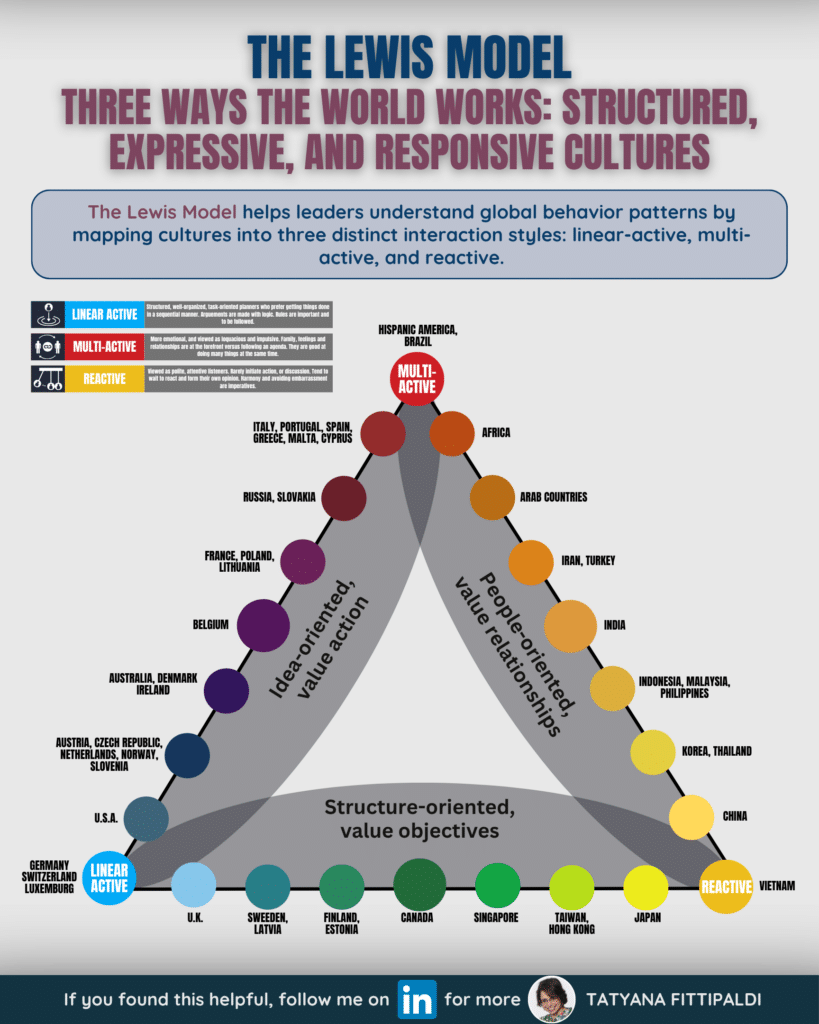
Richard D. Lewis offers another widely used framework that groups cultures into three broad categories: linear-active, multi-active, and reactive as part of The Lewis Model.
Linear-active cultures tend to be structured, task-oriented, and focused on planning and scheduling. Multi-active cultures are more relationship-oriented, flexible with time, and comfortable managing multiple activities at once. Reactive cultures tend to prioritize listening, respect, and careful response, often placing a strong emphasis on harmony.
This model helps explain differences in scheduling considerations, communication flow, and decision-making pace. For example, expectations around time management can vary significantly between these groups, which often becomes a source of misunderstanding in international work.
Using Cultural Frameworks Effectively
These frameworks provide different ways to interpret cultural variation, but they all serve a similar purpose. They help reduce cultural complexity by offering structured ways to understand behavior.
At the same time, they must be used carefully.
Cultural frameworks describe tendencies, not fixed rules. Individuals within any culture will vary based on personality, experience, organizational culture, and context. Relying too heavily on frameworks without observation can lead to cultural stereotypes rather than better understanding.
Cultural intelligence helps balance this. It allows you to use frameworks as guides while remaining attentive to the specific situation in front of you.
When combined, these tools improve how leaders interpret cultural dynamics, adjust communication styles, and operate more effectively across cultural environments.
In the next section, we will look more closely at the core cultural dimensions that appear across these models and how they influence behavior in practice.
Core Cultural Dimensions Across Major Cultural Frameworks
Cultural frameworks help explain why people behave differently. Cultural dimensions take that one step further. They break those differences into patterns you can recognize and work with.
Instead of reacting to individual behaviors, you start seeing the underlying logic behind them.
Below are eight core categories, covering 24 cultural dimensions drawn from major frameworks such as Hall, Hofstede, GLOBE, Trompenaars, and the Culture Map. Each dimension reflects a recurring pattern in how people think, communicate, and act across cultural environments.
1. Identity And Group Integration
Individualism vs. Collectivism (Hall, Hofstede & Trompenaars)
This dimension looks at whether people define themselves primarily as individuals or as part of a group. Individualistic cultures emphasize personal responsibility and independence. Collectivist cultures emphasize group loyalty, belonging, and shared identity.
Institutional Collectivism (GLOBE)
This focuses on whether organizations and societies encourage collective action and shared resource distribution. It reflects how systems support group-oriented behavior at a broader level.
In-Group Collectivism (GLOBE)
This dimension measures how strongly individuals express loyalty, pride, and cohesion within their immediate groups, such as family or organization.
Trusting (Hall, The Culture Map)
This dimension explains how trust is built. In task-based cultures, trust is earned through performance and reliability. In relationship-based cultures, trust develops through personal connection and shared experiences over time.
2. Power And Status
Power Distance (Hofstede, GLOBE & The Culture Map)
This dimension reflects how comfortable a culture is with unequal distribution of power. High power distance cultures accept hierarchy as natural. Low power distance cultures expect more equality and question authority more openly.
Achievement vs. Ascription (Trompenaars)
This determines how status is assigned. Achievement cultures base status on performance and results. Ascription cultures base status on factors such as age, title, background, or relationships.
Deciding (Hall, The Culture Map)
This dimension looks at how decisions are made and how hierarchy comes into play. Some cultures rely on top-down authority, while others emphasize group consensus and broad consultation.
3. Uncertainty And Rules
Uncertainty Avoidance (Hall, Hofstede & GLOBE)
This measures how comfortable a culture is with ambiguity. High uncertainty avoidance cultures prefer structure, rules, and predictability. Low uncertainty avoidance cultures are more open to risk and flexibility.
Universalism vs. Particularism (Hall, Trompenaars)
This dimension reflects whether rules or relationships take priority. Universalist cultures apply rules consistently. Particularist cultures adapt rules based on context and relationships.
4. Gender Roles And Human Interaction
Masculinity vs. Femininity (Hall, Hofstede)
This dimension captures the balance between competitiveness and collaboration. Masculine cultures emphasize achievement and assertiveness. Feminine cultures emphasize cooperation, care, and quality of life.
Gender Egalitarianism (GLOBE)
This measures how much a society promotes gender equality and reduces role differences between genders.
Assertiveness (Hall, GLOBE & The Culture Map)
This reflects how direct and confrontational communication tends to be. High-assertiveness cultures value direct expression. Low-assertiveness cultures prioritize harmony and indirect communication.
Evaluating (Hall, The Culture Map)
This dimension explains how feedback is given. Direct cultures provide clear and explicit feedback. Indirect cultures soften or imply feedback to maintain relationships.
Humane Orientation (GLOBE)
This measures the extent to which a culture encourages fairness, generosity, and care for others.
5. Time And Orientation
Long-Term vs. Short-Term Orientation (Hofstede)
This reflects whether a culture focuses on future outcomes or present and past priorities. Long-term cultures value persistence and planning. Short-term cultures emphasize tradition and immediate results.
Future Orientation (GLOBE)
This dimension measures how much a culture emphasizes planning, investing in the future, and delaying gratification.
Sequential vs. Synchronic Time (Hall, Trompenaars & The Culture Map)
This explains how time is structured. Sequential cultures treat time as linear and structured. Synchronic cultures treat time as flexible and interconnected, often managing multiple priorities at once.
6. Expression And Privacy
Neutral vs. Affective (Trompenaars)
This dimension looks at emotional expression. Neutral cultures control emotions in professional settings. Affective cultures express emotions more openly.
Specific vs. Diffuse (Trompenaars)
This reflects how people separate work and personal life. Specific cultures keep boundaries clear. Diffuse cultures integrate personal and professional relationships.
Indulgence vs. Restraint (Hofstede)
This measures how societies regulate enjoyment and gratification. Indulgent cultures allow more freedom of expression. Restrained cultures emphasize control and social norms.
Communication (Hall, The Culture Map)
This dimension explains how meaning is conveyed. Low-context cultures communicate explicitly through words. High-context cultures rely more on context, tone, and shared understanding.
Persuading (Hall, The Culture Map)
This reflects how arguments are structured. Some cultures prefer principles-first reasoning. Others prefer starting with practical examples before moving to broader ideas.
7. Relationship With The Environment
Internal vs. External Direction (Trompenaars)
This dimension looks at how people relate to their environment. Internal-direction cultures focus on control and influence. External-direction cultures emphasize adaptation and alignment with external forces.
8. Performance Orientation
Performance Orientation (GLOBE)
This measures how strongly a culture values performance, improvement, and achievement. High-performance cultures reward results and progress. Lower-performance orientation cultures balance results with other priorities such as relationships or stability.
Bringing These Dimensions Together
These 24 dimensions are not isolated concepts. They interact and reinforce each other.
They shape:
- communication patterns
- behavioral preferences
- leadership expectations
- customer preferences
- organizational culture
And they explain why the same behavior can carry very different meanings across cultural environments. If you can remember one thing from this long guide is really this. Behavior can carry very different meanings across cultural environments. Because events are filtered through different lenses.

The goal is not to memorize all of them. It is to develop pattern recognition.
Cultural intelligence helps you use these dimensions as a lens. Not as fixed rules, but as a way to interpret what you see, adjust your approach, and navigate cultural complexity with better judgment.
In the next section, we shift from understanding cultural patterns to something more practical: how cultural intelligence can be measured and assessed.
How To Measure And Assess Cultural Intelligence (CQ Assessments And Methods)
Cultural intelligence can feel abstract until you measure it. The good news is that CQ is not just a concept. It is a measurable capability supported by a large body of research in the behavioral sciences and organizational behavior.
Across thousands of peer-reviewed studies, three main approaches to measure CQ have emerged. Each one captures a different angle of how cultural intelligence shows up in real situations.
1. CQ Assessments
The most widely used approach is the use of CQ assessments. These are structured tools designed to evaluate an individual’s capability across the four dimensions of cultural intelligence: CQ Motivation, CQ Cognition, CQ Strategy, and CQ Behavior.
The foundation for most of these tools is the Cultural Intelligence Scale, a 20-item instrument developed by researchers Soon Ang and Linn Van Dyne. The scale has been tested across diverse populations, including executives, expatriates, students, and professionals working in global environments. Over time, it has demonstrated strong reliability and validity, supported by statistical techniques such as inter-rater reliability and statistical power analysis.
Organizations and institutions around the world use these assessments to better understand how individuals operate in cross-cultural settings. Many tools are administered through platforms associated with the Cultural Intelligence Center, which offers expanded versions of the Cultural Intelligence Scale along with benchmarking capabilities into their CQ assessments.
Most cultural intelligence assessments include both a self-assessment and a 360-degree option. The self-assessment captures how individuals perceive their own capabilities. The 360-degree version gathers feedback from others, providing a more complete view of behavior in real situations. If you ever need expert CQ assessment with its debrief, plus cultural intelligence coaching, feel free to contact me at any time.
The value of these tools lies in their precision. Rather than treating cultural intelligence as a general trait, they provide detailed assessment scores across each dimension. This allows individuals to identify specific development areas. For example, someone may score high in CQ Knowledge but lower in CQ Behavior, meaning they understand cultural differences but struggle to translate that understanding into behavior adjustments.
Many assessments, like mine, also provide a personalized report that interprets results and offers practical development guidance. In some cases, these tools include a demographic questionnaire to contextualize results across regions, roles, or levels of international experience for callibration.
It is worth noting that there are other intercultural assessments available. Some focus on cultural preferences or attitudes, such as tools used in international business programs or leadership courses. While these can be useful, CQ assessments are specifically designed to measure capability, not just awareness or orientation.
2. Performance-Based Measures
A second approach focuses on what people can do, not just what they report about themselves. These are often referred to as maximum-performance measures.
Performance-based methods include standardized tests, role plays, simulations, and situational judgment tests. Situational Judgment Tests (SJT), in particular, have gained attention as a practical way to assess cultural intelligence.
In these scenarios, individuals are presented with real-world intercultural situations and asked how they would respond. Their answers are evaluated against established criteria, allowing assessors to measure the quality of judgment and decision-making.
This approach helps address a common limitation of self-report tools. People may believe they would act a certain way, but real situations can reveal different behavioral patterns. Performance-based measures provide a closer view of actual capability, especially for CQ Strategy and CQ Action. That’s why my own CQ Assessment includes performance based questions as well for callibration.
At the same time, it is useful to distinguish between typical-performance measures and maximum-performance measures. Typical-performance measures capture how people usually behave (what people do do). Maximum-performance tests capture what people are capable of doing under their optimal conditions. (what people can do.)
Both perspectives are valuable. One reflects everyday behavior. The other reflects potential.
3. Qualitative Evaluation
The third approach is less formal but still highly practical. Cultural intelligence can be assessed through observation and reflection.
Because CQ is built on four clear capabilities, it provides a useful framework for qualitative evaluation. Leaders, coaches, or team members can observe how individuals engage in intercultural interactions and assess patterns over time.
For example, you might ask:
- Does this person show curiosity and openness when encountering cultural differences, reflecting CQ Drive?
- Do they demonstrate an understanding of cultural norms and dynamics, reflecting CQ Knowledge?
- Do they plan and adjust their approach based on context, reflecting CQ Strategy?
- Do they make effective behavior adjustments in communication and interaction, reflecting CQ Action?
This type of evaluation, often done by cultural intelligence coaches, does not rely on formal assessment scores, but contextual analysis. It can provide meaningful insight, especially when combined with structured feedback, frameworks, and coaching conversations.
Bringing The Three Approaches Together
Each of these methods captures a different aspect of cultural intelligence.
- CQ assessments provide structured, research-backed measurement.
- Performance-based measures reveal how capability shows up in action.
- Qualitative evaluation captures patterns over time in real environments.
When used together, they offer a more complete picture.
They also reinforce an important idea. Cultural intelligence is not fixed. It can be measured, developed, and refined through deliberate effort and experience.

In the next section, w .e will look at how to develop cultural intelligence in practice and what leaders can do to strengthen these capabilities over time.
How To Develop Cultural Intelligence In Practice (Practical Strategies)
Cultural intelligence is not a fixed trait. It is a capability that develops over time through experience, reflection, and intentional effort. While exposure to different cultures helps, experience alone is not enough. What matters is how people process that experience, how they adapt, and whether they build patterns they can apply in future intercultural interactions.
In practice, there are four main ways individuals and organizations develop cultural intelligence.
International Experience And Immersion
One of the most effective ways to build cultural intelligence is through direct exposure to different cultural environments. Living abroad, participating in study-abroad programs, or spending extended time in unfamiliar settings forces individuals to step outside their usual frame of reference.
That process accelerates cultural learning.
People begin to notice differences in communication, decision-making, and behavior. They encounter situations where their usual assumptions no longer apply, and they must adjust. Over time, this builds both awareness and adaptability.
In corporate settings, this often happens through structured international experience. Long-term expatriation assignments require deep intercultural adjustment, as individuals must function within a new cultural system over an extended period. Short-term assignments expose individuals to different environments more quickly, often requiring rapid adaptation.
Some organizations design global roles that include travel rotations across offices, allowing employees to spend several weeks in different regions. General Electric is famous for it’s trainee rotational program called FMP (Financial Management Program), which sends trainees every 6 months to different global locations for on-the-job learning. As an alumni of this program, I can not express my gratitude enough with how much I learned about cultural intelligence and global leadership.
Other types of programs and companies may place individuals in multicultural teams where they may be the only person from a different cultural background, even in virtual environments. These situations create continuous exposure to cultural variation and require ongoing behavior adjustments.
Across all these formats, the pattern is similar. Repeated exposure builds tacit knowledge. Over time, individuals develop a more intuitive understanding of cultural cues and become more comfortable navigating cultural complexity.
Targeted Cross-Cultural Training
Experience alone does not guarantee learning. Without guidance, people may reinforce existing assumptions rather than challenge them. This is where structured cross-cultural training plays an important role.
Effective cross-cultural training programs go beyond sharing information about different cultures. They focus on developing the capabilities that support cultural intelligence, including awareness, interpretation, and adaptation.
Many programs also incorporate elements of psychological capital, such as confidence, resilience, and optimism. These factors support CQ Drive by helping individuals stay engaged in challenging intercultural situations. They also encourage openness to experience, which is a key factor in how quickly people learn from cultural exposure.
Organizations often integrate this type of training into leadership courses or international business programs. When designed well, these programs provide both conceptual understanding and practical application, helping individuals translate knowledge into action.
Actionable Daily Practices
Cultural intelligence is also developed through everyday behavior. Small, consistent actions can have a meaningful impact over time.
One of the most important practices is listening with the intent to understand, not just to respond. This means paying attention to how people express ideas, what they emphasize, and how their communication reflects underlying values.
Another practice is questioning assumptions. Cultural biases often operate at a subconscious level, shaping how situations are interpreted. Taking time to reflect on those assumptions helps improve cultural judgment and reduces the risk of misinterpretation.
Exposure also matters. Seeking out diverse perspectives, working with people from different backgrounds, and engaging in intercultural interactions outside of formal settings all contribute to cultural learning. These experiences create opportunities to test understanding and refine behavior.
Over time, these small actions build consistency. Cultural intelligence becomes part of how a person naturally approaches different situations rather than something applied only in specific contexts.
Facilitated Learning Through Coaching
Coaching provides a more structured and personalized way to develop cultural intelligence. It helps individuals connect experience with insight and turn that insight into practical action.
In coaching settings, individuals can reflect on real situations, explore how cultural dynamics influenced outcomes, and identify specific areas for development. This often includes examining communication patterns, leadership behavior, and decision-making approaches in cross-cultural contexts. These are just a few of the benefits from coaching.
Professional Coaching also supports accountability. It encourages individuals to test new approaches, observe results, and adjust over time. This accelerates learning and helps translate cultural awareness into consistent behavior adjustments.
For leaders working in global environments, this type of support can be particularly valuable. It provides a space to work through complex situations, refine strategies, and build confidence in navigating cultural complexity.
Remember, you can contact me at any time if you ever need this type of service.
Key Takeaways On Strategies
Developing cultural intelligence is an ongoing process. It is shaped by experience, reinforced through training, practiced in daily interactions, and strengthened through reflection.
Each of these elements contributes in a different way.
- Experience creates exposure.
- Training builds structure.
- Daily practice reinforces behavior.
- Coaching accelerates development.
Together, they support stronger intercultural adjustment, more effective communication, and better performance in global environments.
In the next section, we will look at key resources that can support this journey, including some of the most widely recognized books on cultural intelligence.
Best Books On Cultural Intelligence To Expand Your Global Leadership Skills
If you want to deepen your understanding of cultural intelligence and apply it in real-world situations, a few books stand out. Some are more conceptual, others more practical, but together they offer a strong foundation for cross-cultural leadership, intercultural competence, and global business effectiveness.
- The Silent Language — by Edward T. Hall
A foundational work in intercultural communication, this book introduces key ideas such as context, time, and space in communication. It helps readers understand how meaning is shaped beyond words and why communication styles vary across cultures. - The Culture Map: Breaking Through the Invisible Boundaries of Global Business — by Erin Meyer
A highly practical guide that explains how cultural differences affect management, feedback, decision-making, and leadership communication. It is widely used by global leaders to navigate multicultural teams and international business environments. - Leading With Cultural Intelligence: The Real Secret To Success — by David Livermore
This book focuses on applying cultural intelligence in leadership. It combines research and practical strategies to help leaders improve performance in culturally diverse settings and strengthen cross-cultural leadership capability. - Cultural Intelligence: Individual Interactions Across Cultures — by P. Christopher Earley and Soon Ang
A foundational academic text that introduced the concept of cultural intelligence. It provides the theoretical framework behind CQ and explains how individuals adapt and function across different cultural contexts. - Cultural Intelligence: Surviving And Thriving In The Global Village — by David C. Thomas and Kerr Inkson
A practical guide that bridges theory and application. It focuses on how individuals can develop cultural intelligence and apply it to both personal growth and professional effectiveness in global environments. - The Cultural Intelligence Difference — by David Livermore
This book explains why cultural intelligence has become a critical capability in today’s global economy. It highlights how CQ influences performance, relationships, and outcomes across cultures. - Expand Your Borders: Discover Ten Cultural Clusters — by David Livermore
This book organizes the world into ten cultural clusters and provides practical insights into how cultural patterns shape behavior. It is useful for leaders working across regions who want a structured way to understand cultural variation.
These books approach cultural intelligence from different angles, but they all reinforce the same idea. Working effectively across cultures requires more than awareness. It requires the ability to interpret, adapt, and act with intention in diverse environments.
Some of the links in this section are affiliate links. If you click on a link and make a purchase, I may earn a small commission at no additional cost to you. They sponsor my time in researching, vetting & curating, and sharing valuable thought-leadership content to help you achieve your professional goals. Thank you for your support! ❤️️
In the next section, we will address some of the most common questions people have about cultural intelligence and how it applies in practice.
Final Thoughts On Cultural Intelligence: Turning Insight Into Everyday Leadership
Cultural intelligence is often introduced as a capability for global environments. In practice, it shows up in far more ordinary moments.
✔️It shows up in how you interpret a pause in a conversation.
✔️It shows up in how you structure a message for a different audience.
✔️It shows up in how you respond when someone approaches a decision in a way that feels unfamiliar.
Most of the time, the difference between friction and alignment is not intent. It is interpretation.
That is why cultural intelligence matters.
Across this guide, we explored what cultural intelligence is, how it is grounded in research, how it differs from related concepts, and how it can be measured and developed. We also looked at frameworks and dimensions that help explain cultural differences, and at practical ways to apply those insights in leadership, teamwork, and international business.
But the real value of cultural intelligence is not in the models.
It is in how those models change behavior.
When leaders strengthen their cultural intelligence, communication becomes clearer. Decisions become easier to align. Teams collaborate more effectively. Differences stop being a source of friction and start becoming a source of perspective.
This is especially relevant in today’s environment, where most organizations operate across cultures in some form. Even when teams are not geographically distributed, they often bring together different cultural backgrounds, experiences, and expectations. Cultural complexity is no longer the exception. It is part of the operating context.
Developing cultural intelligence is not about becoming an expert in every culture. That is neither realistic nor necessary.
It is about building the ability to observe more carefully, interpret more accurately, and adapt more effectively. It is about expanding your range. That range allows you to lead with greater clarity, communicate with greater precision, and build stronger relationships across cultural differences. And over time, those small adjustments compound.
- They influence how people experience your leadership.
- They shape how your message is understood.
- They affect how quickly teams align and execute.
Cultural intelligence, in that sense, is not a separate skill layered on top of leadership. It is part of how leadership works in a culturally diverse world. As you move forward, the question is not whether you will encounter cultural differences. You already do.
The question is how you will respond to them. That is where cultural intelligence becomes practical.
If you are a senior leader operating across cultures and want to expand your executive presence in a way that translates across borders, this is exactly the kind of work we do in cultural intelligence coaching. Together, we look at how your leadership is currently perceived in different cultural environments, identify where interpretation gaps may be limiting your impact, and build the capabilities to adjust your communication, decision-making, and interaction approach without losing authenticity. The goal is not to change who you are. It is to expand how effectively you can show up, connect, and lead across different cultural contexts. If that is a priority for you or your organization, I invite you to explore how we can work together.
Cultural Intelligence FAQ: Common Questions About CQ Answered
What is cultural intelligence?
Cultural intelligence is the ability to understand, adapt, and function effectively across different cultural contexts. It includes the capability to interpret cultural differences, adjust communication and behavior, and make sound decisions in unfamiliar environments. Cultural intelligence is typically expressed through four capabilities: Motivational CQ (your drive), Awareness CQ (your knowledge), Approach CQ (your strategy), and Behavioral CQ (your action/reaction).
Why is cultural intelligence important for leadership?
Cultural intelligence is important for leadership because it helps leaders communicate effectively, build trust, and align teams across cultural differences. In global environments, leadership effectiveness depends on how well leaders interpret cultural cues, adapt their approach, and manage cross-cultural communication. Cultural intelligence also supports inclusive leadership by helping leaders create environments where diverse perspectives are understood and valued.
How is cultural intelligence different from emotional intelligence?
Cultural intelligence and emotional intelligence both relate to understanding people, but they operate differently. Emotional intelligence focuses on recognizing and managing emotions within familiar cultural settings. Cultural intelligence focuses on interpreting and adapting to cultural differences in unfamiliar settings. Emotional intelligence helps with interpersonal relationships, while cultural intelligence ensures those relationships remain effective across cultural boundaries.
What is the difference between cultural intelligence and cultural competence?
Cultural competence is generally described as the ability to work effectively across cultures, often as a developmental goal or mindset. Cultural intelligence is a measurable capability that explains how individuals achieve that effectiveness. Cultural competence focuses on awareness and sensitivity, while cultural intelligence focuses on action, including motivation, understanding, strategy, and behavior.
What are the four components of cultural intelligence?
Cultural intelligence is composed of four core capabilities:
- Motivational CQ (your drive): Your willingness and confidence to engage across cultures
- Awareness CQ (your knowledge): Your understanding of cultural norms, values, and differences
- Approach CQ (your strategy): Your ability to interpret situations, plan interactions, and adjust your thinking
- Behavioral CQ (your action/reaction): Your ability to adapt communication and behavior in real time
These four capabilities work together to support effective performance in cross-cultural situations.
How can cultural intelligence be measured?
Cultural intelligence can be measured using structured CQ assessments that evaluate the four capabilities: Motivational CQ (your drive), Awareness CQ (your knowledge), Approach CQ (your strategy), and Behavioral CQ (your action/reaction). The most widely used tools provide assessment scores based on self-report or 360-degree feedback and often include a personalized report with development insights.
How do CQ assessments work?
CQ assessments typically include a questionnaire that measures your drive to engage across cultures, your knowledge of cultural differences, your ability to interpret and plan interactions, and your behavioral adaptability. Results are presented in a personalized report that highlights strengths and areas for development, often with benchmarking data to compare your results to global norms.
How does cultural intelligence improve cross-cultural communication?
Cultural intelligence improves cross-cultural communication by strengthening four areas: your motivation to engage, your understanding of cultural differences, your ability to interpret situations, and your capacity to adapt behavior. These capabilities reduce misunderstandings, improve clarity, and help ensure that your message is received as intended across different cultural contexts.